Most nutrition advice around training meals was written for someone doing a two-hour session at a gym, not someone squeezing forty-five minutes of dumbbell work into a living room after work. The two situations call for genuinely different amounts of fueling, and applying the gym version at home usually just means eating more than the session actually needs.
Why Session Length Changes the Math
The advice built around intra-workout carbs and precise timing comes from endurance and long-session research, and it's tied to how glycogen, the stored carbohydrate your muscles actually run on, depletes over time. Glycogen stores hold up fine through the first hour of training and only start running genuinely low somewhere past 60 to 90 minutes of sustained effort. A forty-five to sixty-minute strength session, especially one broken up by rest periods between sets rather than continuous output, doesn't get anywhere near that threshold. The gym-era advice isn't wrong. It's answering a question a short home session was never asking.
Before Training
If you're training within an hour or two of a normal meal, you don't need anything extra. Your body is still digesting and has plenty to work with. Keep that meal reasonably light on fat and fiber if training is close behind it, though: both slow digestion down, and a heavy, greasy meal still sitting in your stomach during a set of squats is its own kind of problem.
The situation that actually needs attention is training fasted, or four-plus hours since you last ate. In that case, a small carbohydrate and protein snack thirty to sixty minutes beforehand, half a banana with some yogurt, or a slice of toast with an egg, prevents the flat, low-energy feeling mid-session without sitting heavy in your stomach.
During a Short Session
Intra-workout nutrition, sports drinks, electrolyte mixes, sipped carbs mid-session, is built for endurance efforts well past ninety minutes. A forty-five to sixty-minute strength session at home doesn't come close to that. Water is genuinely the whole requirement here. The one exception is heat: training somewhere hot and humid enough that you're sweating heavily changes the equation even at forty-five minutes, and that's when an electrolyte drink earns its place. For a normal-temperature living room or garage session, it's solving a problem you don't have.
After Training
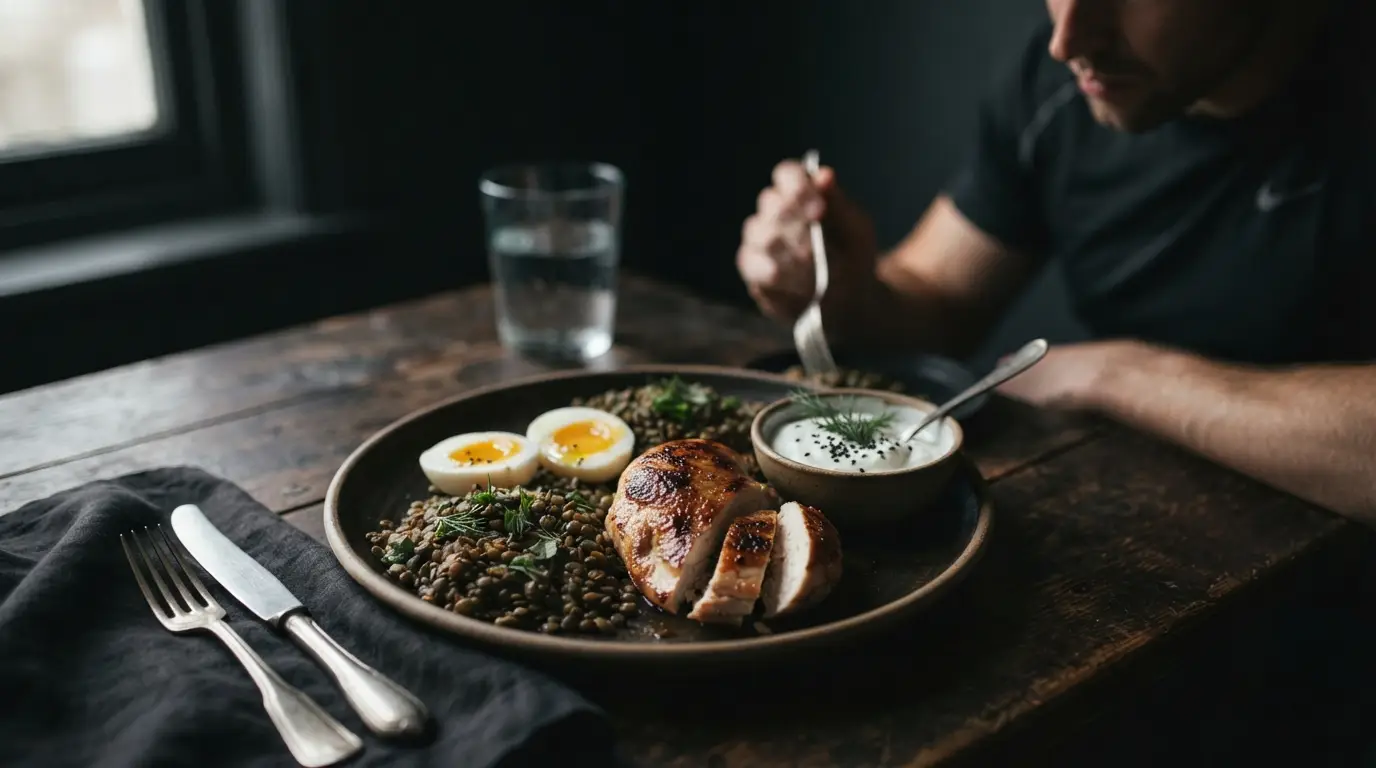
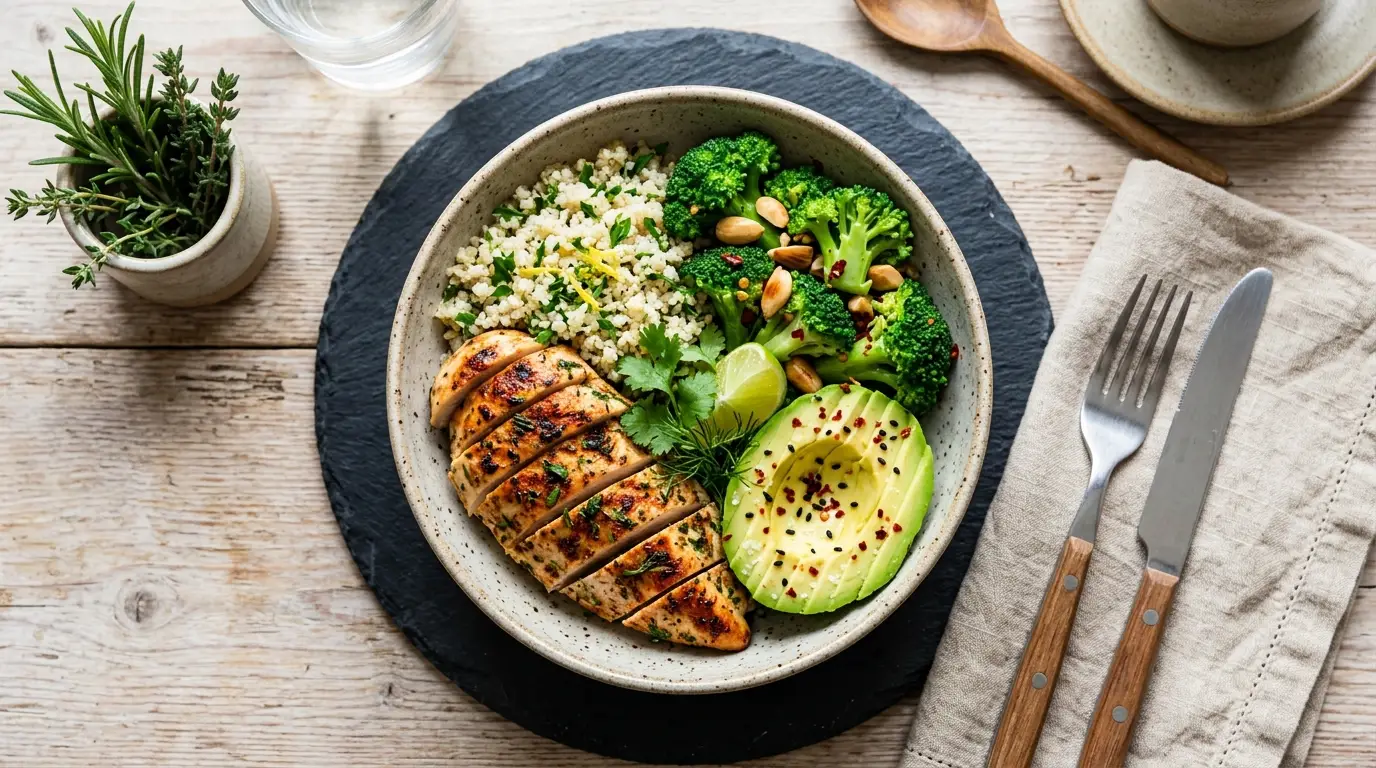
Get a protein source in within a couple of hours, with some carbohydrate alongside it if the session was demanding. That window is wider than the old thirty-minute rule ever suggested, so there's no need to have a shake mixed and waiting before you've even finished your last set. Eggs on toast, a chicken wrap, or a protein shake with fruit all cover it equally well.
About 20 to 40 grams of protein covers a single meal's worth of muscle-building work; more than that just gets used for other things, so there's no need to stack a shake on top of a full meal chasing a bigger number. That figure comes straight from how much protein you actually need in a day, and the same logic that applies to protein timing applies to carbs too: how much you eat across the whole day matters more than what you manage to get down in the twenty minutes after your last set. That post-workout window is wider than most people assume, which is worth understanding on its own.
A Realistic Home Setup
Keep two or three easy options on hand so you're not improvising while tired: Greek yogurt with fruit, eggs with toast, or a protein shake with a banana. None of it needs to be precise. It just needs to already be in the fridge so a good session doesn't end with a bag of chips because nothing else was ready.
None of this requires anything specialty priced either. The same handful of budget-friendly staples that cover your daily protein target work just as well built into a pre- or post-workout meal as they do anywhere else on the plate.