Fitness content sells a version of eating well that runs through salmon, berries, and specialty protein bars, then acts surprised when the grocery bill doubles. None of that is required. The foods that actually deliver the best protein per dollar are the boring ones sitting in the middle aisles, and they always have been.
The Myth of the Expensive Diet
The assumption that eating well costs meaningfully more than eating badly doesn't hold up as well as it sounds. A widely cited systematic review and meta-analysis of diet-cost studies, comparing healthier dietary patterns against less healthy ones across dozens of trials, found the gap runs to roughly a dollar and a half more per person per day, not the doubled grocery bill specialty fitness marketing implies. Most of that real gap comes from swapping processed snack foods and sugary drinks for whole foods, not from needing exotic ingredients.
The gap between the healthiest and least healthy dietary patterns runs to roughly a dollar and a half more per person per day, not a doubled grocery bill.
The Foods That Carry the Weight
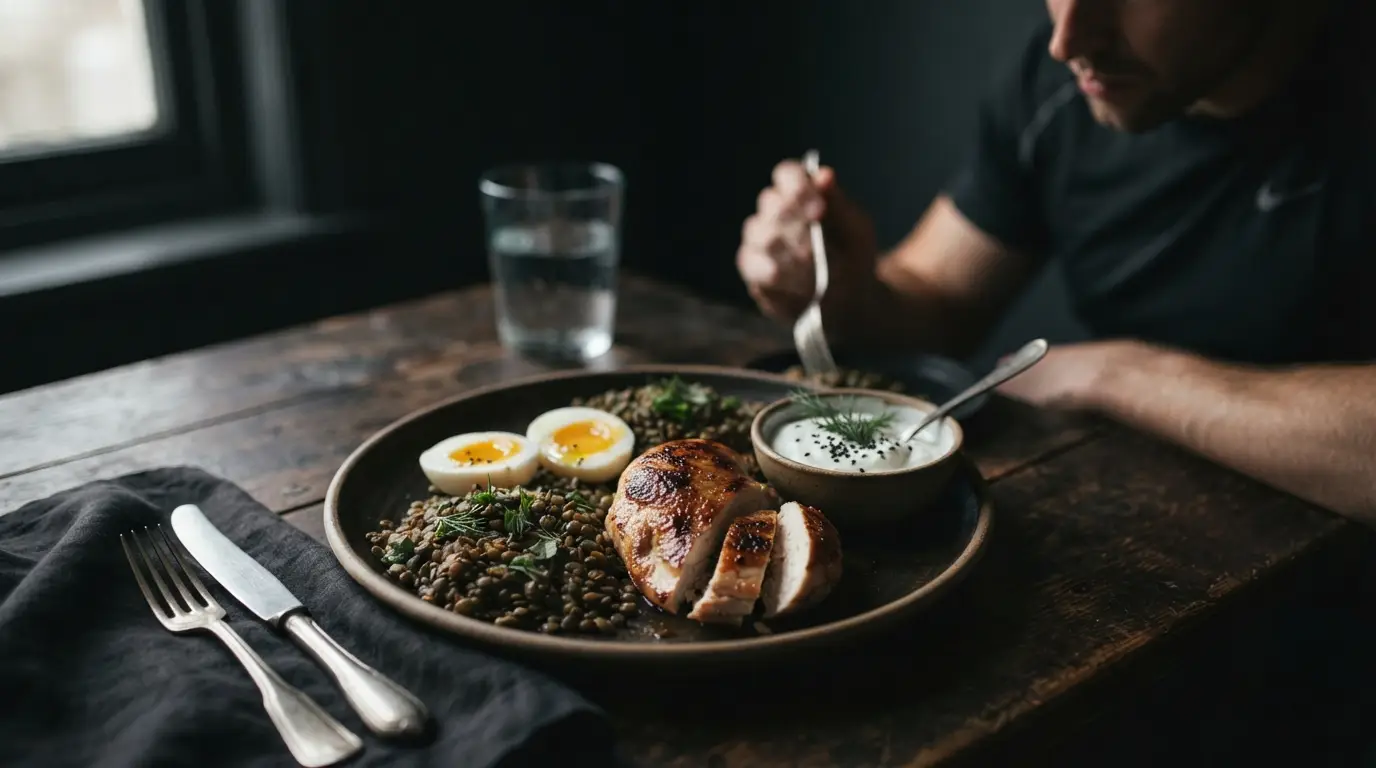
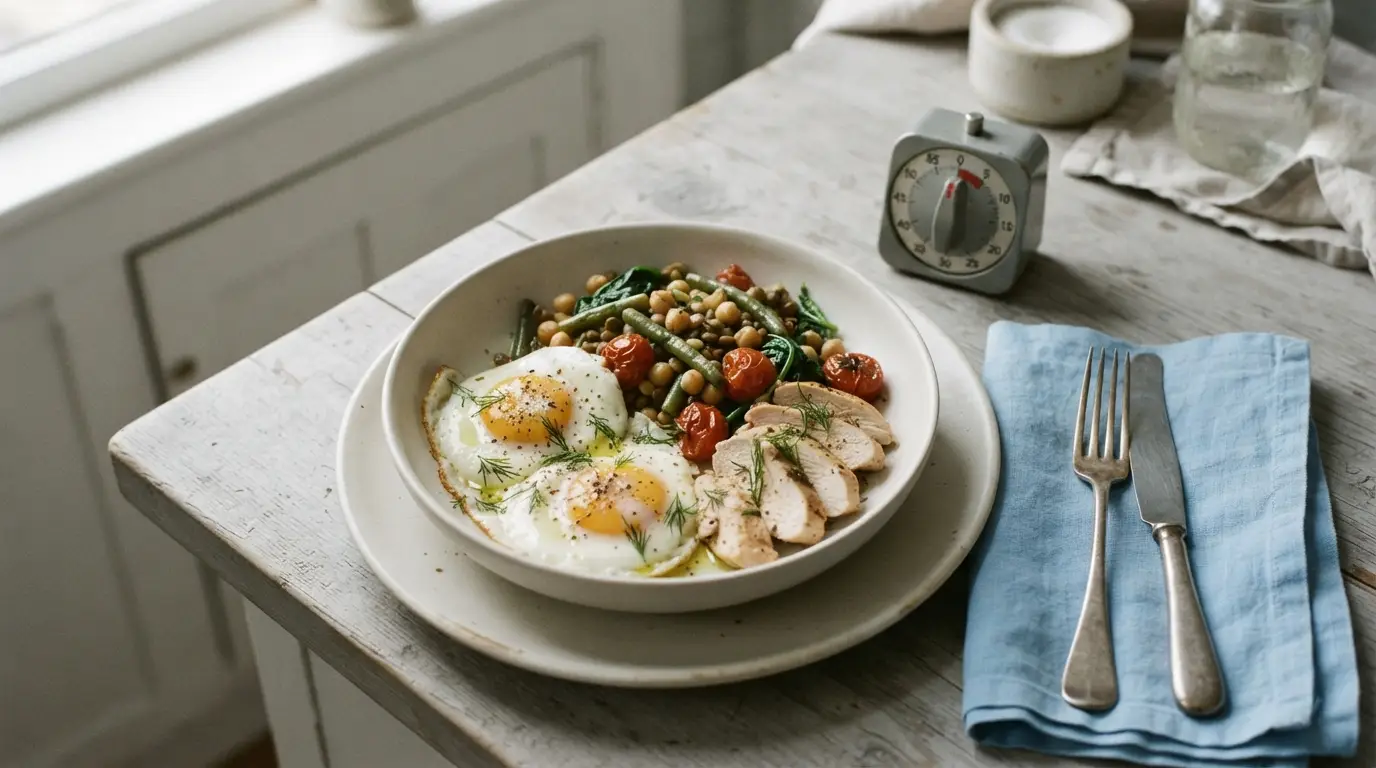
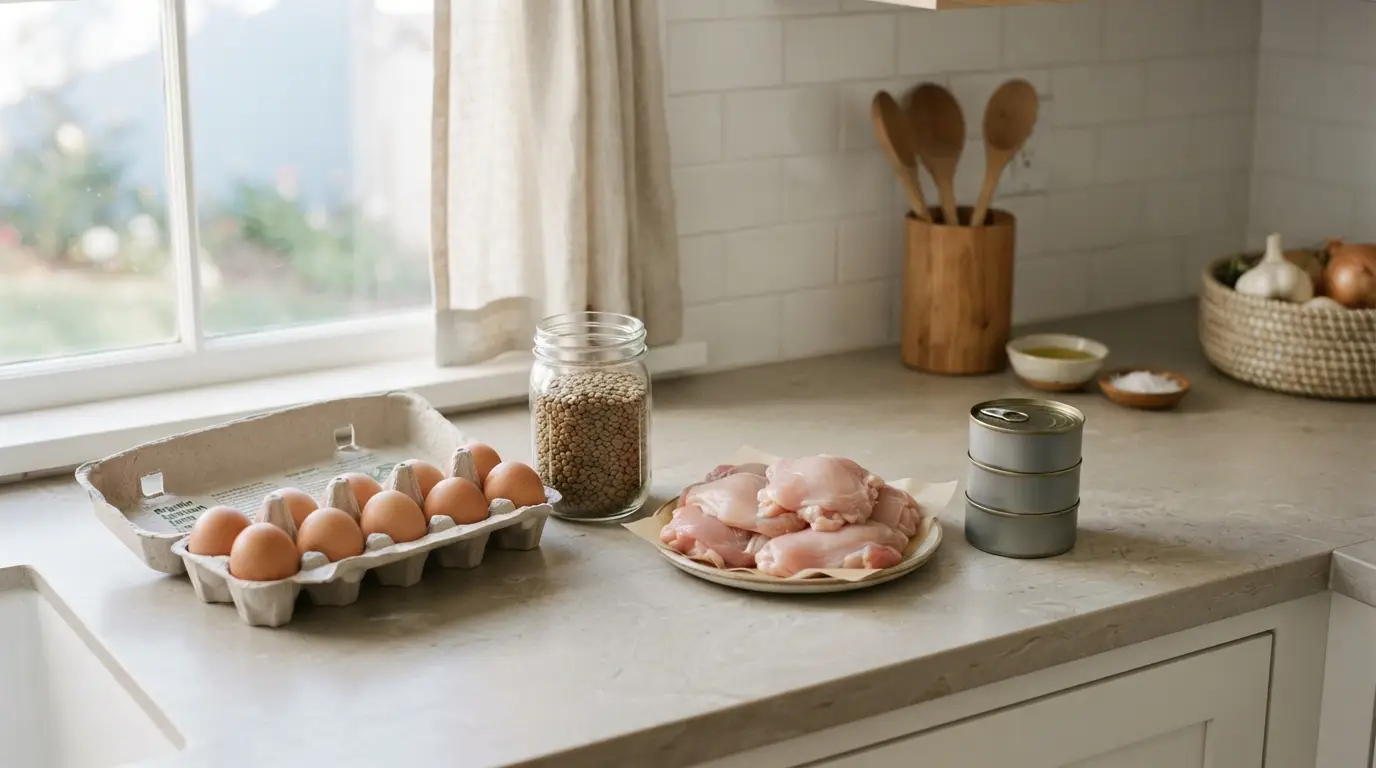
Eggs, chicken thighs, canned tuna, dried lentils, and plain Greek yogurt cover most of what a training diet needs, and every one of them is cheap in bulk. Chicken thighs specifically beat chicken breast on price per gram of protein most weeks, and the extra fat doesn't hurt anything if your calories are already accounted for. Canned tuna and dried lentils both keep for months without refrigeration, which means buying in bulk when they're cheap doesn't waste anything.
Canned and frozen protein sources aren't a downgrade from fresh, either. Fish and vegetables are typically frozen or canned close to peak freshness, which locks in most of the nutrient content rather than losing it, unlike fresh produce that sits in transit and on a shelf for days before it reaches your fridge. Dried beans and lentils cost less than their canned equivalents if you're willing to soak and cook them yourself; canned versions cost a bit more for the convenience of skipping that step. Neither choice is wrong, it's a straightforward trade of time for a small amount of money.
For the actual gram target these foods need to hit, that comes down to your bodyweight, not a flat number.
Buy in Bulk, Cook in Batches
A five-kilo bag of chicken thighs or a large bag of dried lentils costs meaningfully less per serving than the same food bought in small packages several times a week. Cook the whole batch once, portion it into containers, and you've turned one hour of cooking into four or five days of meals that are already macro-accounted for. This also removes the moment of weakness where a busy evening turns into a delivery order.
The one thing bulk buying can quietly undo is the savings itself: food that spoils before you get to it was never actually cheap. Freeze what you won't eat within three or four days as soon as you portion it, rather than leaving a full week's worth sitting in the fridge on the assumption you'll get to all of it in time.
Where to Spend More
Not every dollar needs to be squeezed. Frozen vegetables are just as nutritious as fresh and considerably cheaper, so that's an easy place to save. Where spending a bit more is worth it is variety, rotating between a few protein sources instead of eating identical chicken and rice for months, which is less about nutrition and more about not quitting the whole approach out of boredom in week three.
Supplements Are a Convenience, Not a Requirement
Protein powder almost always costs more per gram of protein than the whole foods on this list. That's not a reason to avoid it entirely, it earns its place when hitting a high daily target through food alone gets genuinely difficult, or when a busy day leaves no real window to cook. It's a backup for when the plan breaks down, not the foundation the plan should be built on.
A Simple Weekly Shape
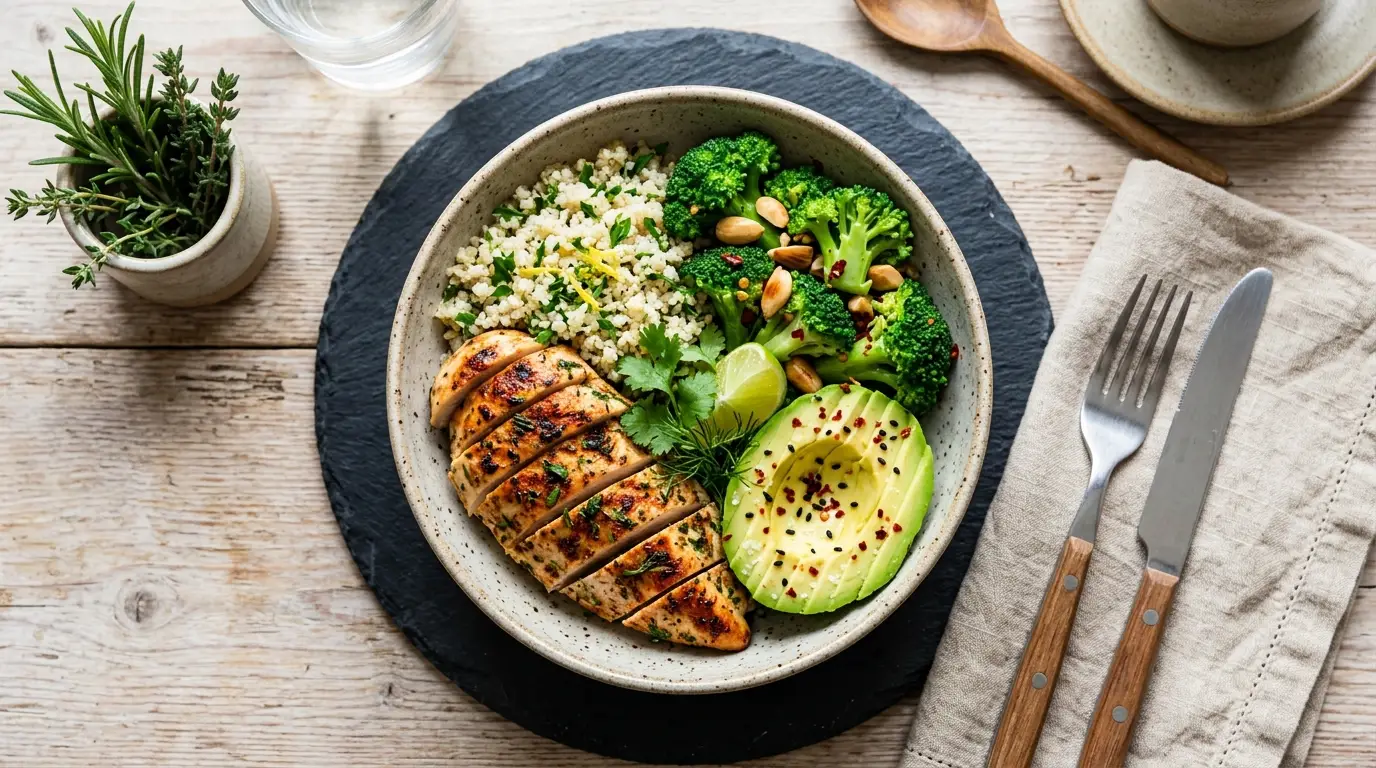
Two proteins on rotation, one bulk carb source like rice or oats, frozen vegetables, and eggs to fill any remaining gap. That combination hits most people's protein target for less than the cost of a single pre-made meal-replacement plan, and it takes one grocery trip a week to maintain.
The same staples work just as well built into a meal built around your training session as they do anywhere else on the weekly plan.