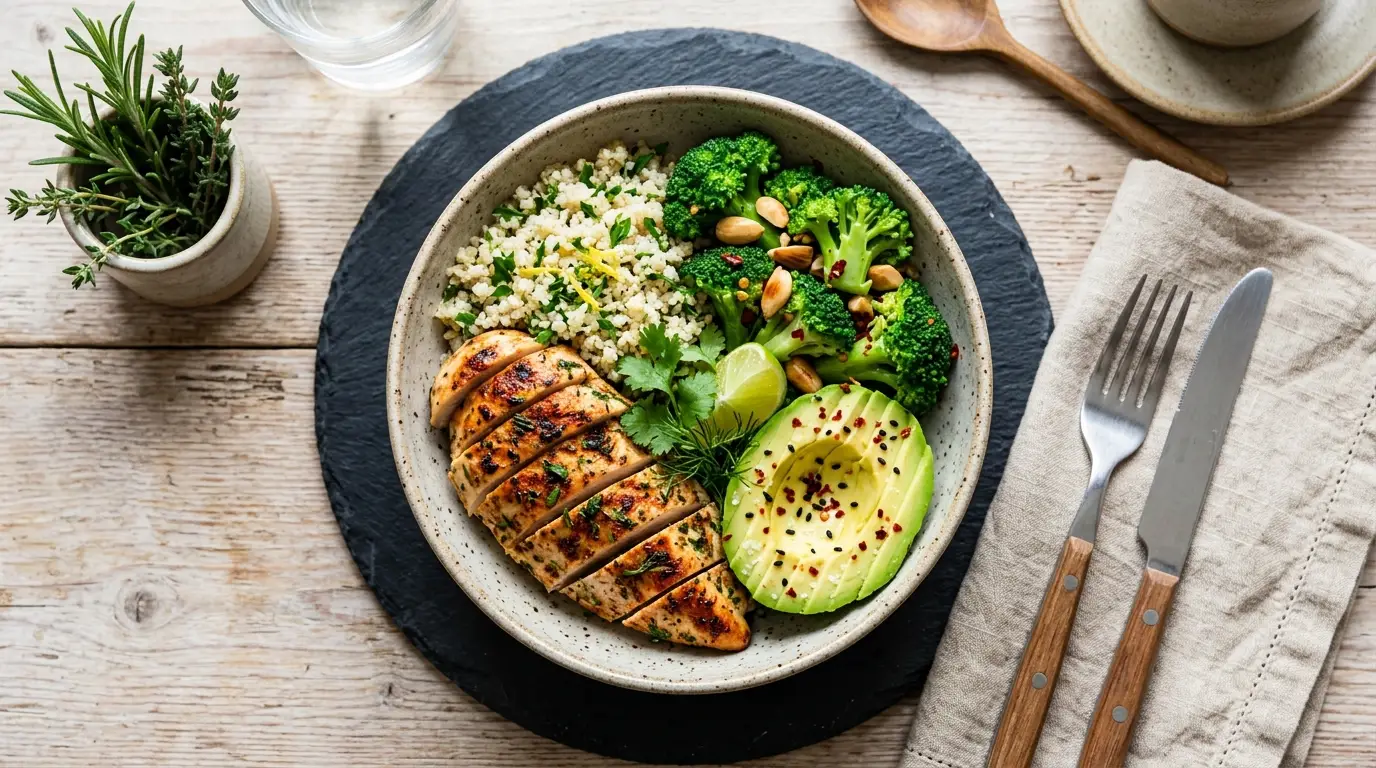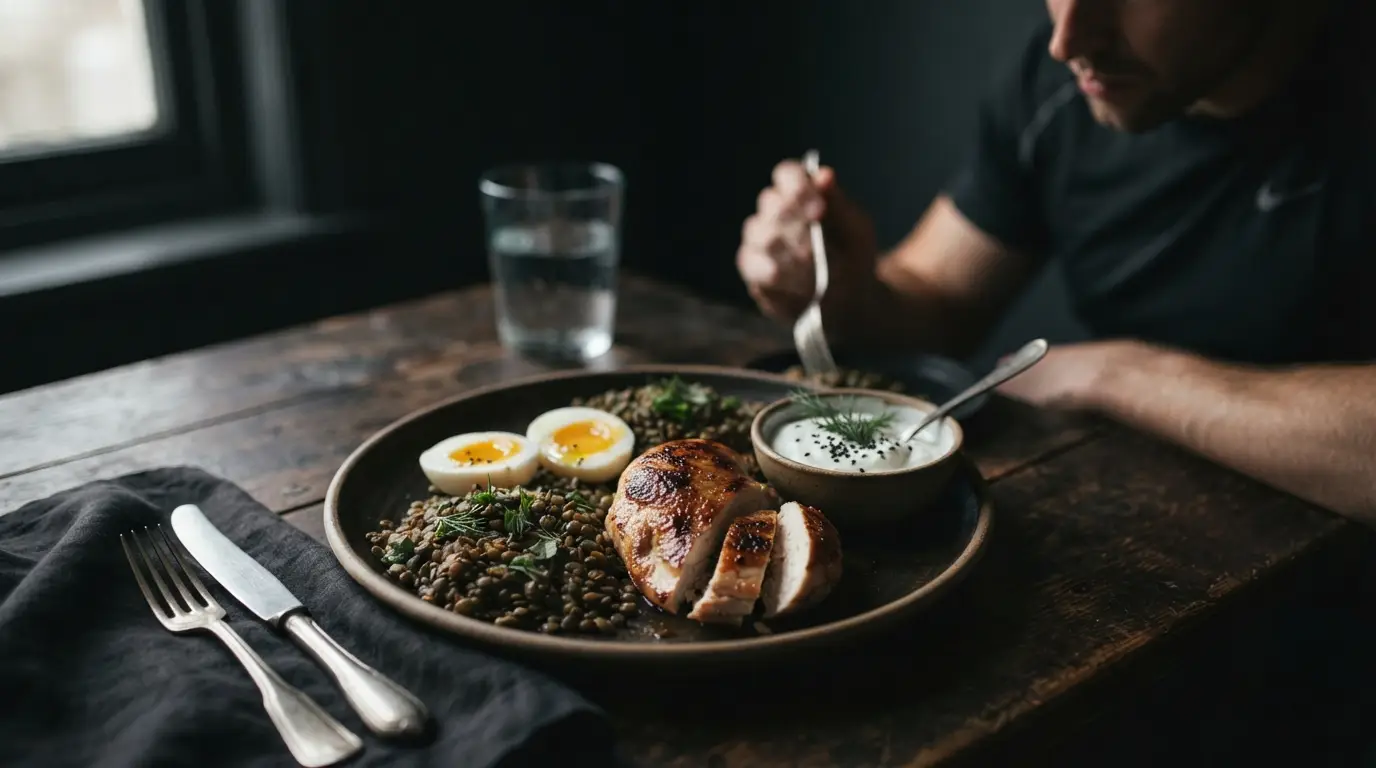
Three shakes a day, chicken at every meal, and a nagging feeling that it's still not enough. That's what happens when the target people are chasing is wrong. The protein debate has run for decades, and the gym floor still mostly operates on more is better. The research tells a different story, one with a surprisingly firm ceiling.
What the Evidence Shows
The most robust research on protein and muscle growth points to a ceiling around 1.6 grams per kilogram of bodyweight per day for maximizing muscle protein synthesis. That number isn't a guess. It comes from a 2018 meta-analysis in the British Journal of Sports Medicine, led by Robert Morton, that pooled 49 studies and roughly 1,863 resistance-trained participants and found gains in muscle mass essentially plateaued past that point. The same analysis put the statistical upper bound, covering even the studies showing the highest benefit, at 2.2 grams per kilogram, which is where the higher end of most recommendations comes from, not because more always helps, but because that's the edge of what the data can rule out.
Why There Is a Per-Meal Ceiling
Total daily protein isn't the whole picture, because your body can't put unlimited protein from a single meal to work building muscle. Each meal triggers its own burst of muscle protein synthesis, and that burst has a ceiling of its own, driven largely by leucine, the specific amino acid that acts as the on-switch for the process. Once a meal supplies roughly 2 to 3 grams of leucine, found in about 20 to 40 grams of a typical protein source, the switch is fully flipped. More protein in that same sitting still gets digested and used by the body, just not for building new muscle tissue. It gets burned for energy or stored instead.
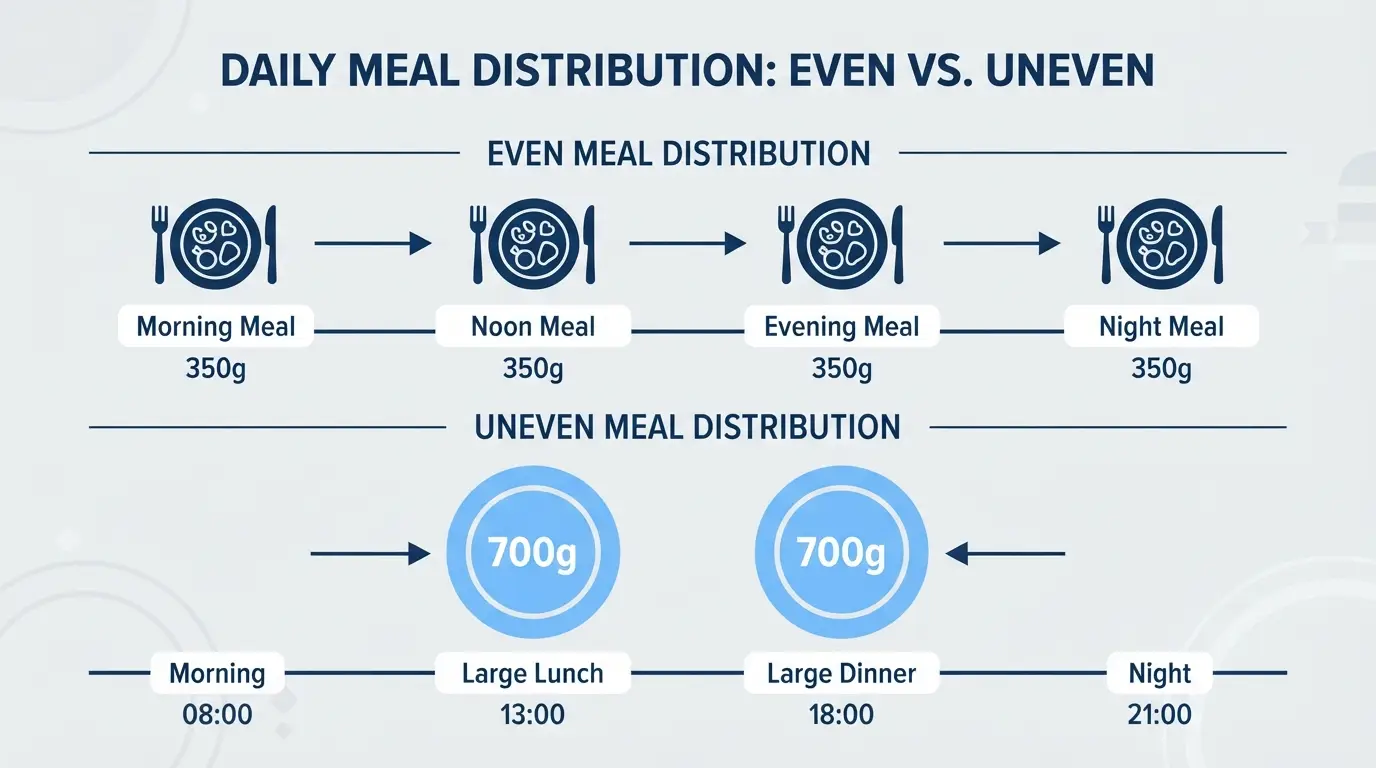
A 2013 study in The Journal of Physiology tested this directly: the same 80 grams of protein, spread across twelve hours of recovery after a training session, in three different patterns, eight small 10-gram doses, four 20-gram doses, or two large 40-gram doses. The four-dose pattern, roughly one serving every three hours, produced the highest overall rate of muscle protein synthesis, beating both the small frequent doses and the two large ones. Total protein was identical across all three groups. Only the pattern changed.
The same total protein, split into four servings roughly three hours apart, built more muscle protein than the same total split into eight small doses or two large ones.
Distribution Matters Almost as Much as Total
Practically, that means hitting your daily target in two large meals works worse than spreading it across four or five smaller ones, each landing somewhere in that 20 to 40 gram range. How that protein lines up around your actual training session is a separate question, covered in pre- and post-workout meals.
When You Are Cutting, the Number Changes
The 2.2 grams per kilogram upper figure is usually aimed at people in a calorie deficit or training at very high volumes, and for good reason. Both conditions push your body to burn more protein for fuel or repair rather than for building muscle, so there's less margin for error. There's a nuance worth knowing if you're lean and already carrying a fair amount of muscle: research specifically on lean, resistance-trained athletes cutting body fat recommends protein closer to 2.3 to 3.1 grams per kilogram of lean body mass, not total bodyweight. For someone with a low body fat percentage, lean mass and total weight are close enough that it barely matters. For someone carrying more body fat, calculating from total bodyweight overshoots the real target, sometimes by a meaningful amount, since fat tissue doesn't need the extra protein that fat-free tissue does.
What This Looks Like on a Plate
For most home trainers, aim for 1.6 to 2.0 grams per kilogram of bodyweight, spread across four meals. A 75-kilo person lands at roughly 120 to 150 grams a day. That's achievable without a single scoop of powder if your diet includes eggs, fish, poultry, legumes, or dairy, and it doesn't have to be expensive to get there either, a handful of budget-friendly staples cover it without much effort. Supplements make hitting the number more convenient. They are not doing anything a chicken thigh isn't.
Rexum's TDEE calculator gives you a daily calorie target to work from. Multiply your bodyweight in kilos by 1.6 to 2.0 and you've got the protein number to build into it.