A pair of adjustable dumbbells and a bench get dismissed as a compromise setup, something you settle for until you can join a gym with a real barbell rack. That's backwards. For most people training at home, dumbbells aren't the compromise. They're the more practical tool, and they cover almost every movement pattern that actually drives strength and muscle growth.
The two things you genuinely lose without a barbell are a higher absolute load ceiling and a couple of specific lifts, most notably the heavy back squat and conventional deadlift once the weight climbs past what a pair of dumbbells can offer. Even a well-stocked adjustable set tops out well below what a barbell and a full plate rack can load. For almost everyone outside competitive powerlifting, that ceiling is a long way off and not what's actually limiting their results.
The Patterns Dumbbells Cover
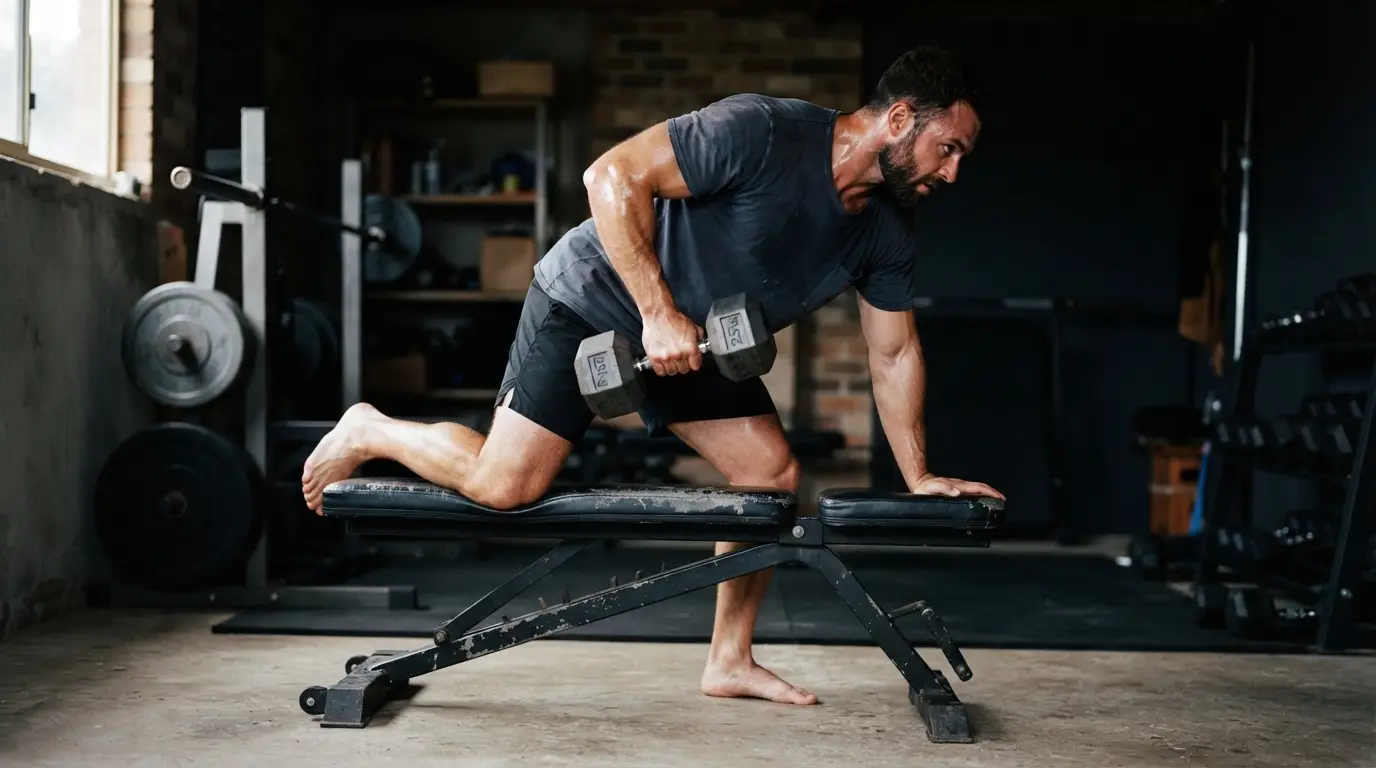
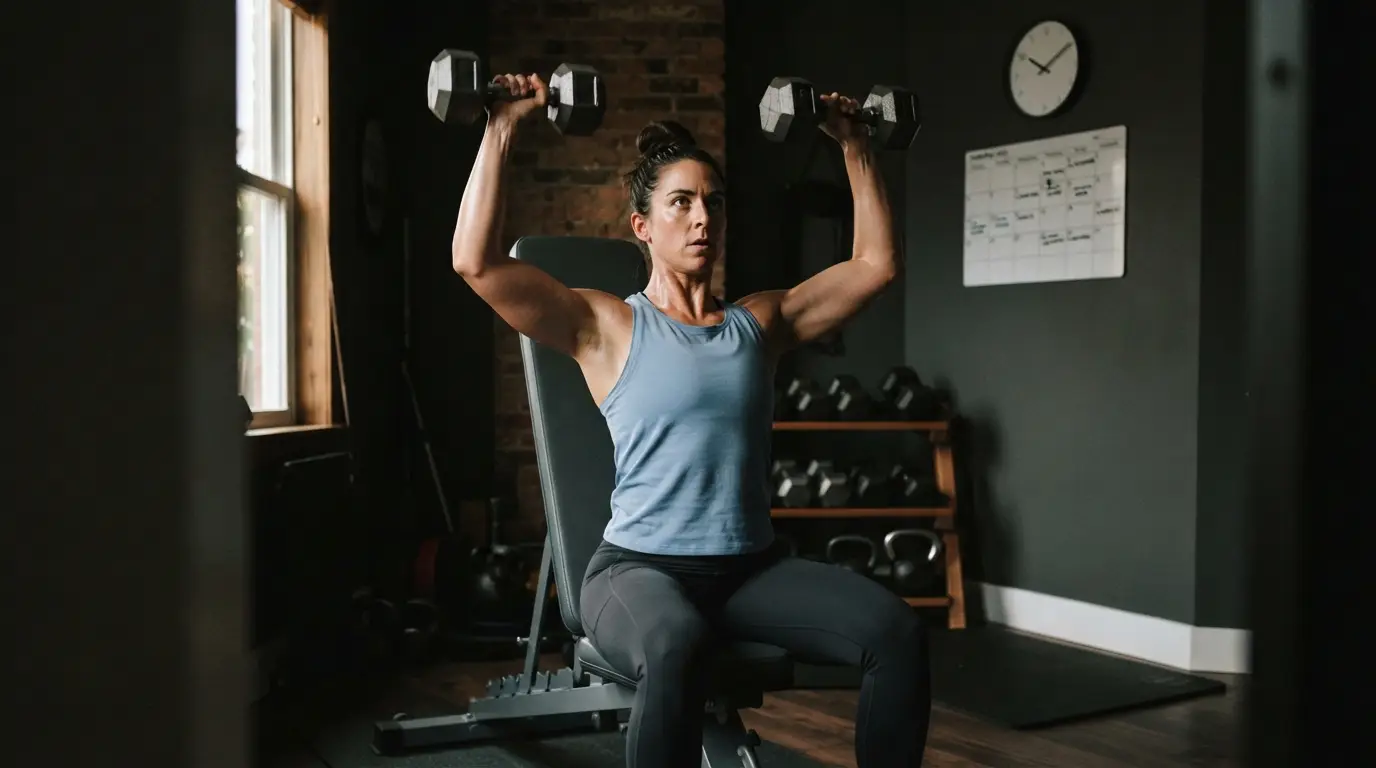
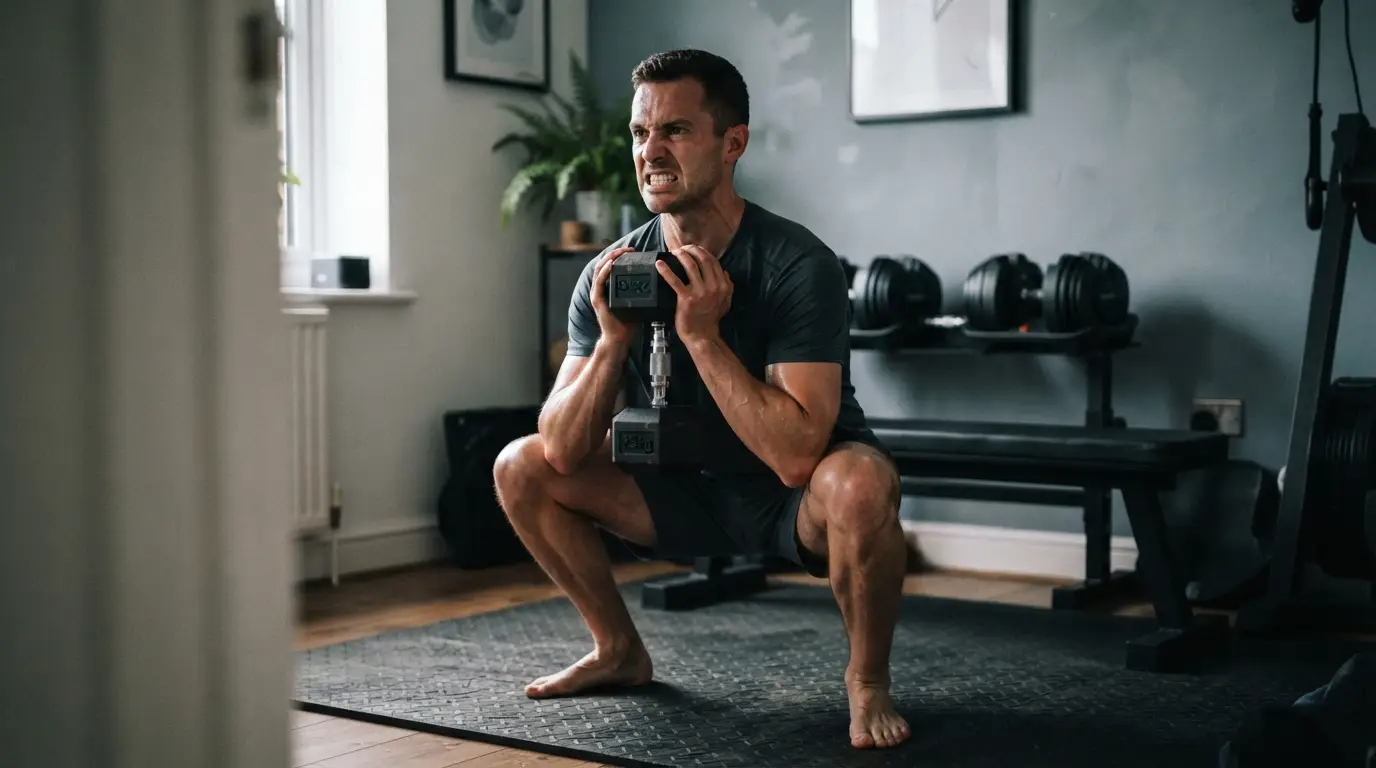
Strength training comes down to five or six movement patterns, and dumbbells hit all of them. A goblet squat or a split squat covers the squat pattern. A single-arm or dumbbell Romanian deadlift covers the hinge. A flat or incline dumbbell press covers horizontal and vertical pushing. A one-arm row covers pulling. Farmer's carries and suitcase carries cover loaded carrying, which barbells are actually worse at than dumbbells. There isn't a major pattern missing from that list.
The One Real Adjustment You Need to Make
The limiting factor with dumbbells isn't the exercises, it's the load jumps. Most adjustable dumbbells move in 2 to 2.5 kilo increments per side, and once you're pressing or squatting a pair that's already heavy, adding the next increment can be a bigger relative jump than adding the same weight to a barbell. The fix is to stop relying on load as your only lever. Push your rep ranges higher, ten to twenty reps instead of five to eight, slow down the lowering phase, or reduce rest between sets.
That fix has real research behind it, not just logic. A 2017 systematic review and meta-analysis in the Journal of Strength and Conditioning Research, led by Brad Schoenfeld, compared low-load training, as light as 30% of a one-rep max, against high-load training and found essentially equivalent muscle growth between the two, as long as sets were taken close to failure. Strength gains still favor heavier loads somewhat, which matters if a specific one-rep max is your actual goal, but for building muscle, higher reps at a lighter dumbbell weight aren't a lesser substitute. All three of these levers, reps, tempo, and rest, still count as genuine progressive overload, and they let you keep advancing on a plateau in available weight.
Low-load training, as light as 30% of a one-rep max, produced essentially equivalent muscle growth to high-load training, as long as sets were taken close to failure.
Where Unilateral Work Pays Off
Training one side at a time, which dumbbells force you into more than a barbell does, isn't just a consolation prize. Single-arm and single-leg work exposes strength imbalances that a barbell can hide for years, since a dominant side can quietly compensate for a weaker one. Part of why that compensation happens is a well-documented phenomenon called the bilateral deficit: the combined force two limbs produce working together is consistently less than the sum of what each limb produces working alone. A split squat or a one-arm row sidesteps that entirely and will find an imbalance in a single session, giving you a specific, correctable target instead of a vague sense that one side "feels off."
Why Carries Are a Dumbbell Advantage
Farmer's and suitcase carries aren't just a convenient filler exercise, they train something a barbell genuinely can't reach. Carrying uneven or single-sided load forces your core to resist bending sideways with every step, a demand called anti-lateral-flexion that most barbell lifts, braced symmetrically through a fixed bar, never really ask of you. That's real, transferable core strength for anything in daily life that involves carrying something heavy and lopsided, which is most things.
What This Looks Like in Practice
A dumbbells-only session doesn't need to look apologetic. Five exercises covering squat, hinge, push, pull, and carry, three to four sets each, is a complete session. Where you'd add a sixth barbell exercise in a gym, add a second unilateral variation instead. A Bulgarian split squat alongside your goblet squat replaces the exercise variety a barbell rack would have given you, and it does it while addressing side-to-side imbalances a barbell never would have caught.
Pairing two of those five exercises as a superset is also a fast way to fit a complete session into less time.
Rexum's exercise library tags every movement by equipment, and both the library and the custom workout builder let you filter and search by it, so finding dumbbell-only exercises for each slot is quick. It doesn't yet generate a full program automatically from the equipment you tell it you have, that's a heavier lift the app doesn't do for you today, but picking dumbbell-tagged exercises into your own session takes a few taps, not a search through exercises that assume a rack you don't own.