Somewhere out there is a five-day bro split pinned to someone's fridge that they've actually followed twice this month, because life keeps eating the other three sessions. If that's you, the fix usually isn't more discipline. It's a program built for the three days you actually have.
Three sessions a week is the genuine sweet spot for most people training without a coach, not a fallback. It's enough frequency to drive real adaptation, and it leaves enough recovery days that you're not spending half your week managing fatigue instead of living your life.
Why Full-Body Beats a Split at This Frequency
A push/pull/legs split makes sense when you're training five or six days a week, because each muscle group still gets hit at least twice. Run that same split across three days, though, and each muscle group only gets trained once every seven days. A 2016 systematic review and meta-analysis in Sports Medicine, led by Brad Schoenfeld, pooled the available frequency research directly and found that hitting a muscle group twice a week produced significantly more hypertrophy than once a week, when total weekly volume was held equal. Full-body sessions solve this automatically: three sessions a week means three weekly exposures for everything, not one.
Hitting a muscle group twice a week produced significantly more hypertrophy than once a week, when total weekly training volume was held equal.
The Hidden Frequency Bonus
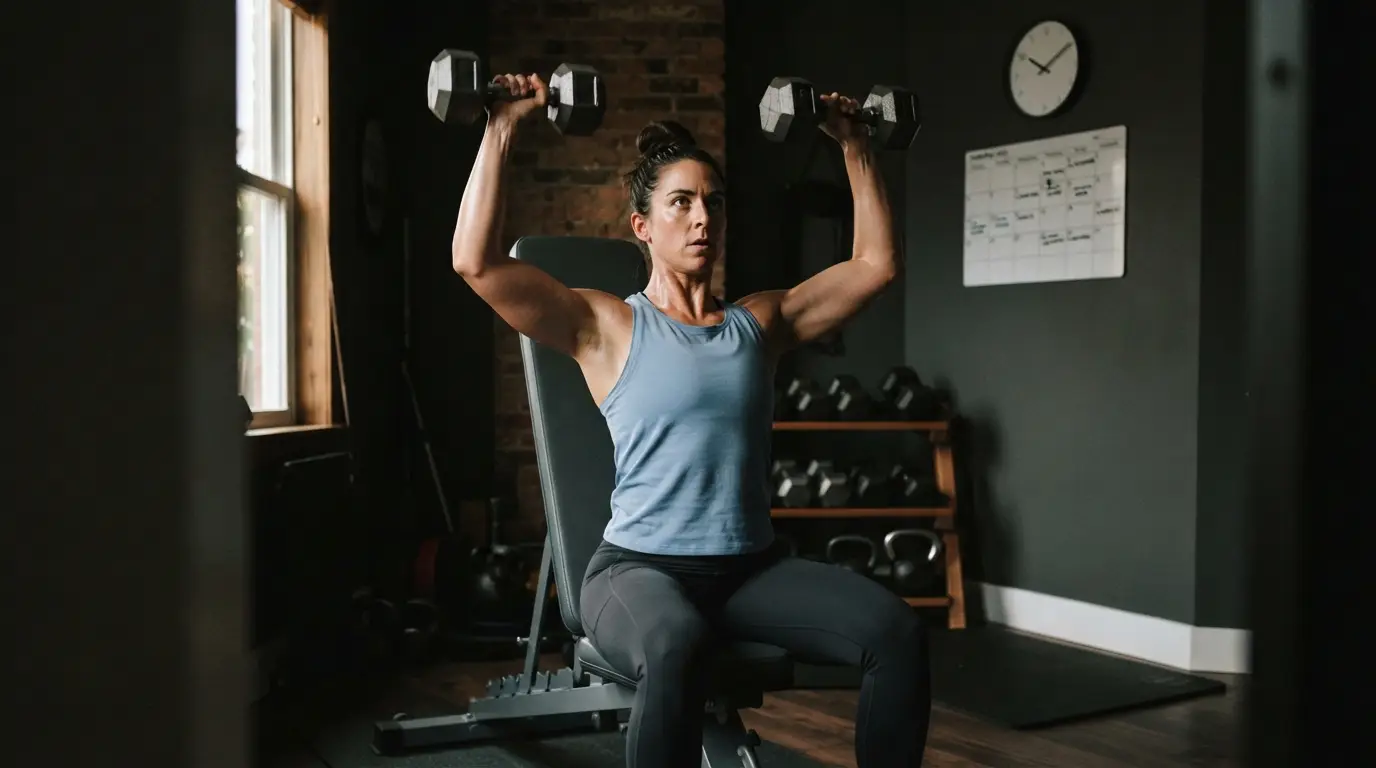
Full-body training compounds this advantage in a way that isn't obvious from just counting primary lifts. A bench press is a chest exercise on paper, but it also loads the triceps and front shoulders as secondary movers. A row is a back exercise that also works the biceps. Run five full-body slots three times a week and the smaller muscles riding along as secondary movers end up getting trained more often than their single weekly "primary" slot would suggest, on top of whatever direct frequency they already get.
The Template That Works
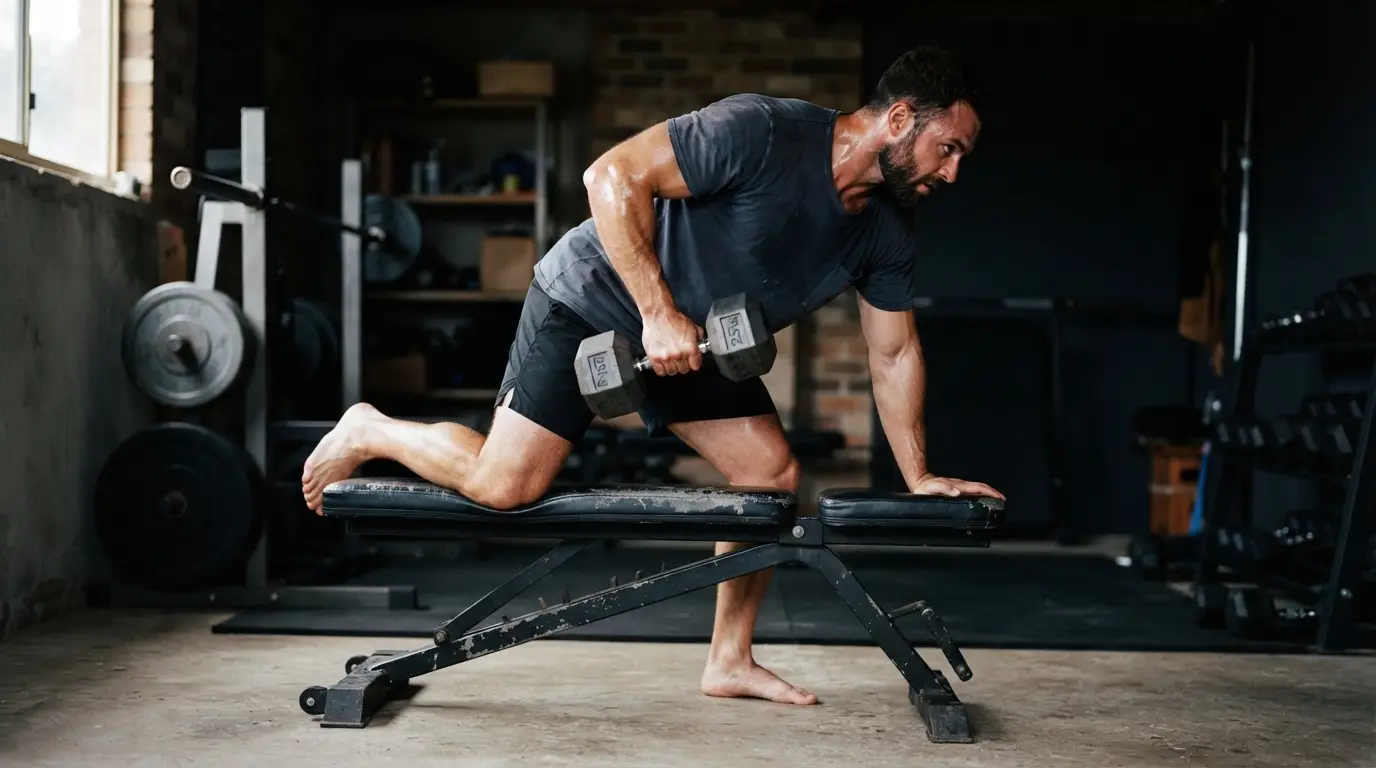
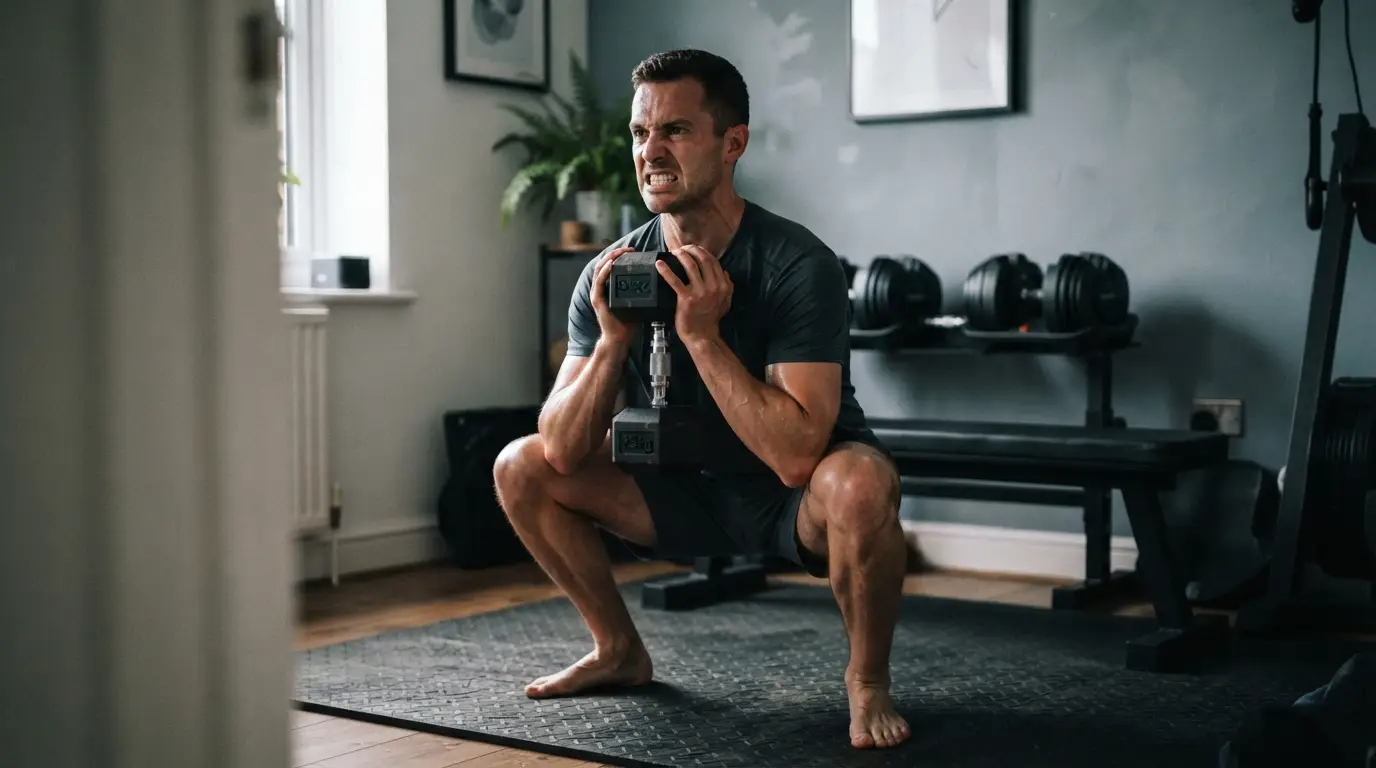
Each session needs one hip-hinge movement, a deadlift variation or a hip thrust, one squat pattern, back squat, goblet squat, or a lunge variation, a horizontal push like a bench or dumbbell press, a pull such as a row or a pull-up, and something unilateral or a loaded carry to round it out. That's five slots, not five exercises. Some sessions fill a slot with one hard set of a heavy movement. Others split the same slot across two lighter exercises. The slots stay constant. What fills them can flex around your equipment and your energy that day. Put the biggest compound lift for the day, usually the hinge or the squat, first in the session while you're freshest, and let the smaller, more fatigue-tolerant slots absorb whatever energy is left.
Alternate Two Templates Instead of Repeating One
Running the identical session three times a week gets stale fast and doesn't vary the stimulus enough. Alternate between two templates, call them A and B, across your three weekly slots: squat-focused A on Monday, deadlift-focused B on Wednesday, A again on Friday, then B leads the following Monday. You still repeat each session often enough to track real progress on it, but the muscle groups get worked from more than one angle across the month.
The actual weight and rep increases within each template should still follow real progressive overload, not a fixed weekly bump.
When to Deload
A three-day full-body program compounds fatigue faster than a split does, since every session hits everything. Every three to four weeks, cut your total volume by roughly 40% while keeping the weight on the bar the same. The warning signs that you're overdue for one, rather than just tired: reps stalling despite consistent effort, joints feeling achy rather than muscles feeling worked, and sleep quality dropping even though nothing else in your life changed. The reasoning behind why this works, and what happens if you push past it, is worth understanding on its own; the case for rest days covers the full picture.
Right now, alternating your A and B sessions and remembering to schedule that deload week is on you. Save both versions with Rexum's custom workout builder and switch between them by hand each session, an automatic rotation and deload scheduler isn't built yet, but tracking two named workouts and alternating them yourself takes about as long as it took to read this sentence.